


Roll Call Training
Crisis to C.A.L.M.
Series Description
This series of resources introduces the C.A.L.M. concept that officers may embrace in order to successfully resolve high-stress or difficult situations. A C.A.L.M. officer is better able to make quick, informed decisions and brings calm to a situation. A C.A.L.M. officer is in control of their emotions and actions, and that calm becomes contagious: it can spread to others involved in the crisis or difficult situation.

Description
"The one thing you can control on every call is yourself." In this video, members of law enforcement discuss the importance of remaining calm during a crisis and how that calm is achieved through the C.A.L.M. concept. Watch along as they review specific skills and methods officers can use while responding to high stress events and difficult situations. Mastering one’s emotional control does not only benefit the officer but, because being calm is contagious, can spread to any others involved in the crisis.
Related Resources
Podcast—Crisis to C.A.L.M. for Front Line Supervisors
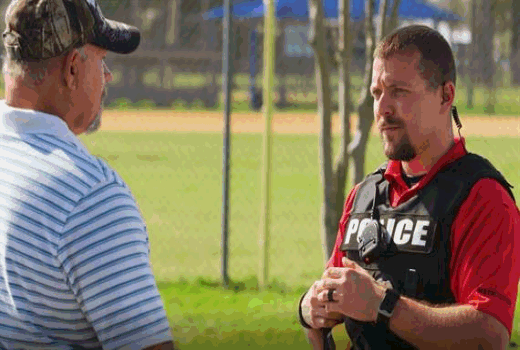
"I haven't seen a time where leadership has been more important than it is now. Frontline supervisors, they lead the people on the ground—boots on the ground that are out dealing with the critical situations." Floyd Wiley, a lead VALOR instructor, and Captain Brandon Post of the Provo, Utah, Police Department discuss the challenging times law enforcement officers are facing and how important it is for frontline supervisors to remain focused on remaining calm during crises."
Recorded Events
Printable Materials
Hang these printable materials at your agency to let fellow officers know about this officer safety resource.
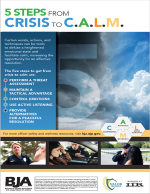
Five Steps From Crisis to C.A.L.M. Overview
The first poster in the Crisis to C.A.L.M. series outlines the five steps to take a difficult situation from crisis to calm. See the agency guide for further information.
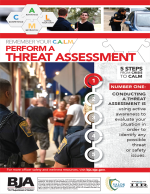
From Crisis to C.A.L.M.—Perform A Threat Assessment
Step 1) Perform a threat assessment. This poster provides information on arriving at a call and conducting a threat assessment. This poster should be used in conjunction with the other posters of this series. See the agency guide for further information.
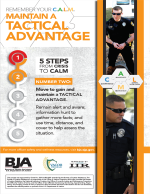
From Crisis to C.A.L.M.—Maintain A Tactical Advantage
Step 2) Maintain A Tactical Advantage. This poster provides information on the importance of maintaining a tactical advantage when arriving at a call. This poster should be used in conjunction with the other posters of this series. See the agency guide for further information.
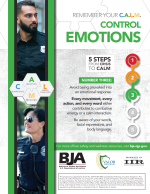
From Crisis to C.A.L.M.—Control Your Emotions
Step 3) Control Your Emotions. This poster provides information on the importance of controlling emotions during a high-stress call. This poster should be used in conjunction with the other posters of this series. See the agency guide for further information.
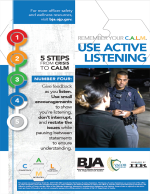
From Crisis to C.A.L.M.—Use Active Listening
Step 4) Use Active Listening. This poster provides information on the importance of active listening and not just listening to respond, especially during a high-stress call. This poster should be used in conjunction with the other posters of this series. See the agency guide for further information.
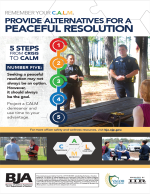
From Crisis to C.A.L.M.—Provide Alternatives for a Peaceful Resolution
Step 5) Provide Alternatives for a Peaceful Resolution. A peaceful resolution is always the goal, but sometimes is not feasible. This poster provides information on the importance of working toward a peaceful resolution during high-stress calls. This poster should be used in conjunction with the other posters of this series. See the agency guide for further information.
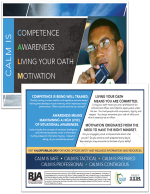
A C.A.L.M. officer brings calm to a crisis or difficult situation. Print this visor card with the overview of the concept of C.A.L.M.
#CALMIsContagious / #CALMIsCourageous Agency Social Media Guide
This guide provides law enforcement agencies with everything needed to inform communities of the efforts officers are making in order to ensure that they are working to strengthen and build positive relationships with residents. This guide is a companion piece to the Crisis to C.A.L.M. Series.
If any users have difficulty accessing these materials due to a disability they may have, please contact us, and we will do our best to assist them. We are committed to providing access to all participants/users of electronic technology and removing barriers if at all feasible. Thank you.